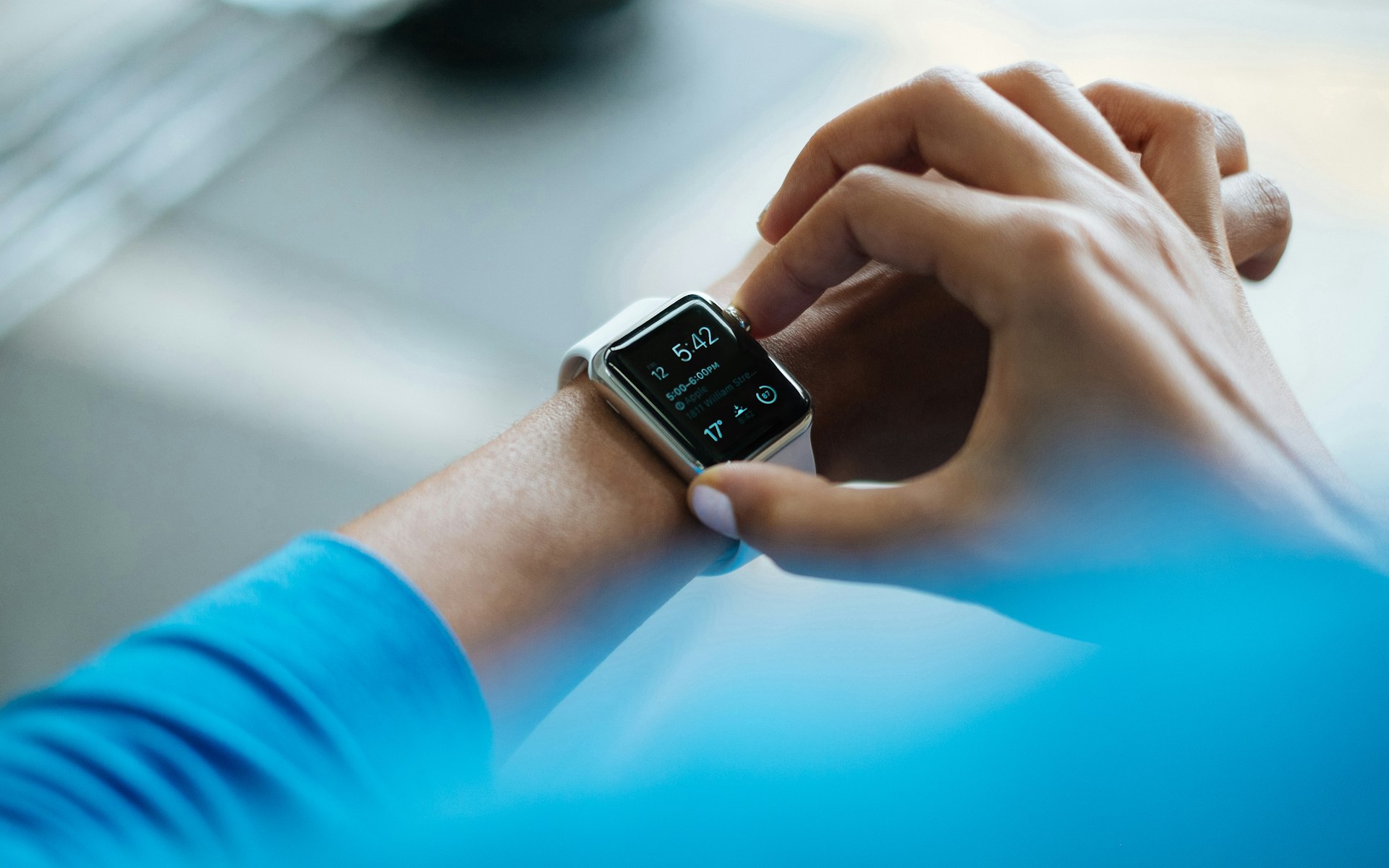
Every morning your ring or watch hands you a number, and you've probably learned to read its mood: green is good, red is bad, and somewhere in between is "meh." That number is your heart-rate variability, HRV, and of all the metrics a wearable throws at you, it's the one most worth understanding. Not because it's magic, but because it's one of the few that reflects how your body is actually coping, rather than just what you did.
The catch is that HRV is also the most misread number on your dashboard. People chase a higher figure, panic at a dip, or compare their score to a friend's, all of which miss the point. Here's what it really measures, and how to turn it into something useful.
What HRV actually is
Your heart doesn't beat like a metronome. Even at a steady 60 beats per minute, the gap between one beat and the next is constantly, subtly changing, maybe 0.9 seconds, then 1.1, then 0.95. HRV is simply a measure of that variation. Counter-intuitively, more variation is the healthy sign: it means your nervous system is flexible and responsive.
That flexibility comes from the two branches of your autonomic nervous system, the "fight or flight" sympathetic side and the "rest and digest" parasympathetic side, constantly negotiating. When you're recovered and calm, the parasympathetic side has room to do its job, and the spacing between beats varies more. When you're stressed, under-slept, fighting something off, or still paying back a hard workout, the sympathetic side dominates, the beats march more evenly, and HRV drops.
A high HRV isn't a trophy. It's a sign your body has the spare capacity to handle what comes next.
Why it changes day to day
HRV is exquisitely sensitive, which is exactly why it's useful, and why it's easy to over-interpret. A single low reading can come from a late dinner, a glass of wine, a stressful email at 11pm, a warm bedroom, or the first night of a cold you don't feel yet. None of those mean you're "broken." They mean your body spent the night doing something other than pure recovery.
This is the first mental shift: one number is noise; the pattern is signal. A single dip tells you little. A week of steadily falling HRV, on the other hand, is your body raising its hand, usually well before you consciously feel run down.
How to read your own number
HRV is deeply individual. A perfectly healthy 25-year-old might sit at 90 milliseconds while an equally healthy 50-year-old sits at 35, both fine. It drops with age, varies with genetics, and depends on how your device measures it. Comparing your number to anyone else's is, frankly, meaningless.
What's meaningful is your own baseline and how today compares to it. This is why good wearables show a personal range rather than a universal "good/bad" line, and why researchers studying athletes recommend tracking a rolling weekly average instead of reacting to daily spikes. As one widely cited review of HRV in elite endurance athletes put it, the trend over a week is far more informative than any single morning's reading.
A simple way to use it
- Within your normal range: carry on. Train, work, live as planned.
- One day below: note it, don't panic. Ask what last night looked like.
- Several days trending down: ease off. Protect sleep, drop intensity, and look at what's draining you.
What actually moves your HRV
If you want to influence the number, it helps to know which levers are real. In rough order of impact:
- Sleep. The single biggest driver. Both how long and how deeply you sleep show up in your overnight HRV.
- Alcohol. Few things tank HRV as reliably as a drink or two close to bedtime. If you ever want proof your wearable works, this is it.
- Late, heavy meals. Digesting while you sleep keeps the sympathetic system busy and suppresses recovery.
- Training load. Hard sessions lower HRV short-term, that's normal and expected. Chronically low HRV during a training block is the warning sign.
- Stress. Psychological stress is physiological. A tense week shows up in the data even if your training is light.
Notice what's not at the top of that list: a pill. Supplements can play a supporting role, magnesium is involved in nervous-system regulation and sleep quality, and omega-3 fatty acids have been linked to autonomic function, but they work at the margins. Anyone selling you a capsule that "boosts your HRV" while you sleep six hours and drink four nights a week is selling you the wrong thing.
From number to decision
Here's the honest truth about wearables: most people collect beautiful HRV data and do absolutely nothing with it. The number becomes a morning horoscope, glanced at, felt about, forgotten. The value was never in seeing the trend. It's in acting on it.
Acting starts with behaviour: when your HRV trend dips, the highest-leverage moves are protecting sleep, going easier on training, and cutting the obvious culprits for a few days. That's free, and it works. Targeted nutrition sits one layer below that, a sensible support once the basics are in place, not a substitute for them.
This is exactly the gap YouCaps works in. We read the signals your wearable already collects, including your HRV trend, and translate them, within the bounds of what the science and EU food-claim rules allow, into a monthly supplement formula matched to your patterns. Not a machine that promises to fix your recovery, but an honest bridge between the data you already have and a choice you'd otherwise make on a hunch. The behaviour is still yours to change; we just make the nutrition part stop being guesswork.
Related: see the recovery and tracking gear we recommend, from a smart ring to a percussive massager.