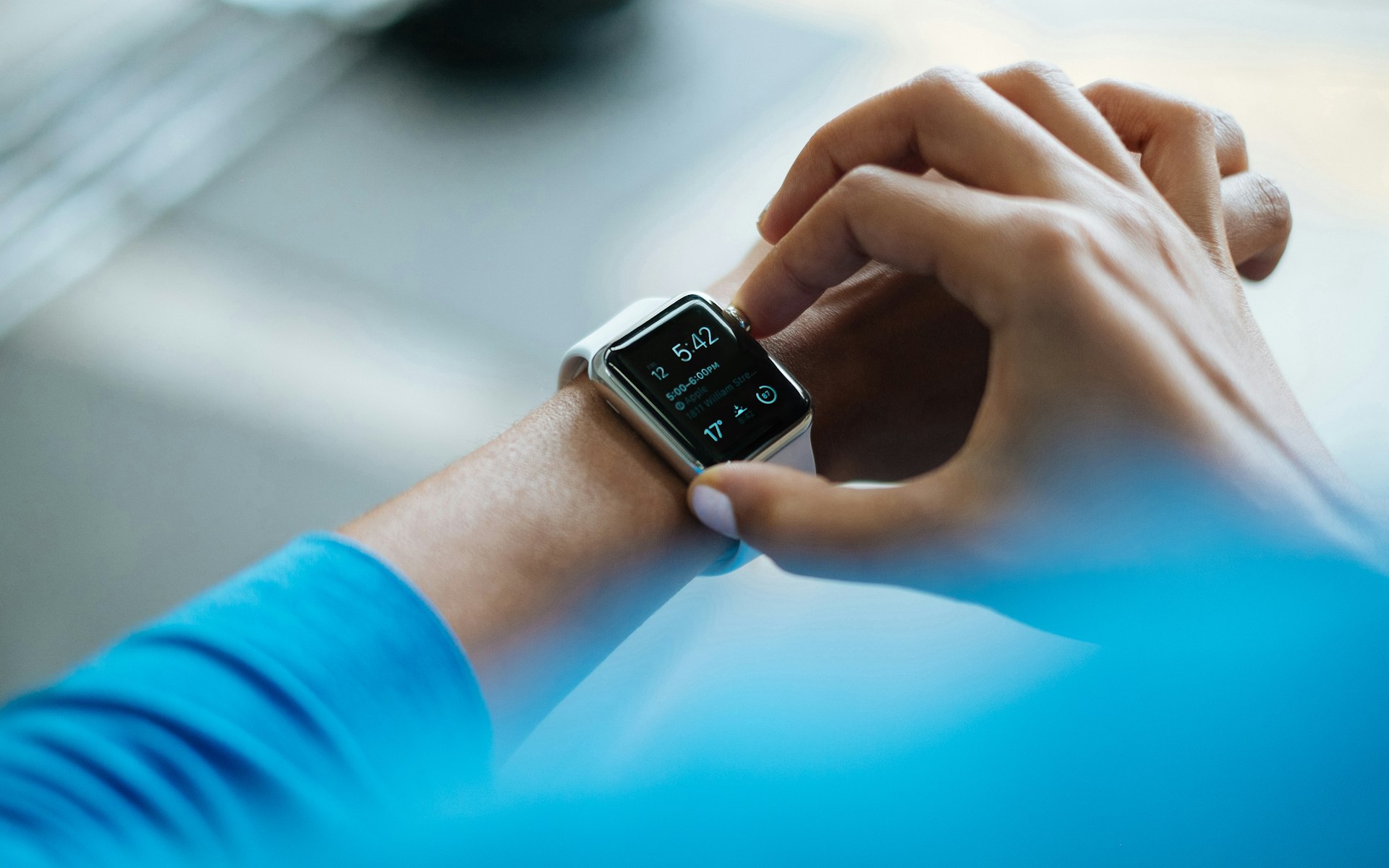
A wearable is good at measuring. But a morning score only means something once you know what sits underneath it. Four signals together tell you the most about your night: your HRV, the shape of your resting heart rate, your breathing, and how you handle the numbers. Understand those, and your data becomes a compass instead of a report card.
HRV: the mirror of your nervous system
Heart rate variability (HRV) is the variation, in milliseconds, between consecutive heartbeats, the so-called R-R interval. It is the most valid measure for reading the state of your autonomic nervous system during sleep.
That nervous system has two branches constantly competing for control of your heart. The sympathetic branch is the accelerator: it switches on the fight-or-flight response and makes your heartbeat tight and metronome-like (low HRV). The parasympathetic branch is the brake: it works through the vagus nerve, switches on rest-and-digest, and introduces constant micro-fluctuations in your rhythm in time with your breathing (high HRV).
During a good recovery night the parasympathetic branch should dominate. A high nocturnal HRV means your body is resilient and actively recovering. A sudden drop in your average nocturnal HRV is often the first data signal that your body is fighting something: acute stress, inflammation, overtraining, or an oncoming infection.
One thing is crucial and often forgotten: HRV is deeply individual. A healthy 25-year-old might sit at 90 milliseconds and an equally healthy 50-year-old at 35. So compare yourself to your own baseline, never to someone else's.
Thayer and colleagues described, in their neurovisceral integration model (2012), that higher HRV goes together with better regulation from the prefrontal cortex and a lower stress load. And chronically low HRV is a robust, independent predictor of cardiovascular risk and a disrupted sleep architecture (among others, Jarczok and colleagues, 2013).
The resting heart-rate curve: hammock vs downhill
It is not only how high your resting heart rate sits, but above all the shape of the curve across the night. Your wearable plots that heart rate on a graph, and the shape tells the story of your recovery.
The hammock (optimal). Ideally, your heart rate drops sharply after you fall asleep and reaches its lowest point in the middle of the night, around 3 to 4 a.m. After that it rises gently towards waking. That hammock shape means your body used the first half of the night for physical recovery, with the growth-hormone pulse and deep sleep.
The downhill curve (suboptimal). If your heart rate only reaches its lowest point just before waking, your body had to "work" through the early hours instead of recovering. The two most reliable causes: late meals (digestion pulls blood to the core and your heart pumps harder) and alcohol (your liver spends hours metabolising ethanol, which keeps sympathetic activity artificially high). Alcohol is one of the most predictable disruptors: you almost always see it back in a higher resting heart rate and a lower HRV.
The hammock shape was popularised by wearables like Oura, but the physiology underneath is solid. Brandenberger and colleagues (2003) showed that the early drop in heart rate during the first deep-sleep stages is essential for cardiovascular rest, and that disturbing it affects blood pressure the next day.
Breathing: your quietest alarm
Your breathing rate (breaths per minute) is a remarkably stable value during sleep. For most healthy adults it sits tightly between 12 and 20 per minute.
Precisely because it barely moves, a rise of just 1 to 2 above your personal baseline is an acute sign of physiological load. The sympathetic branch turns up your breathing to move more oxygen to your tissues. This often happens 24 to 48 hours before you actually feel symptoms of a cold or virus, because your immune system is already fighting in the background and your core temperature is creeping up.
That is why good wearables don't look at breathing alone but combine it with your HRV and your skin temperature. Together those three signals give an early warning. Natarajan and colleagues (npj Digital Medicine, 2020) showed in large-scale wearable data that subtle changes in nocturnal breathing, combined with HRV changes, could flag viral infections before the wearer had any symptoms.
The trap: orthosomnia
Now that we can measure everything, there is also a psychological trap: orthosomnia, the obsession with perfecting your sleep data.
The mechanism is almost cruel. See a poor recovery score in the morning and it can trigger a nocebo response: the worry about the data switches on your sympathetic system during the day, with cortisol. In the evening you then go to bed with performance pressure ("I need a good score tonight"), and that very alertness blocks the transition into sleep. So the wearable itself becomes the cause of the insomnia.
Your data is a compass, not a report card. One bad night is noise; the trend over weeks is the signal.
Baron and colleagues (Journal of Clinical Sleep Medicine, 2017) introduced the term orthosomnia and showed that some patients actually worsened their sleep through a perfectionist fixation on tracker numbers, sometimes distrusting the clinical gold standard (polysomnography) in favour of their wearable. The lesson: use your data to act, not to worry.
From data to your night
The biggest gains come not from staring at a score but from acting on your trend. If your HRV drifts down for a week or your resting heart rate climbs, the strongest moves are free: catch morning light, keep caffeine early, cut back on alcohol, and keep your bedroom cool. There is more on that in the biology of sleep.
Targeted nutrition sits one layer below that, as support once the basics are in place. Within EU food-claim rules there is little, but something, that can be said firmly: melatonin contributes to reducing the time it takes to fall asleep, and magnesium contributes to the normal functioning of the nervous system and to the reduction of tiredness and fatigue. Those are the claims we make. About a higher HRV or better deep sleep we promise nothing, because for a supplement that is not substantiated.
This is the gap YouCaps works in. We read exactly these signals your wearable already collects and translate them, within what the science and the rules allow, into a monthly formula matched to your pattern. Not a miracle, but an honest bridge between your data and a choice you would otherwise make on a hunch.
Related: see the wellness gear we recommend, including a smart ring to read your sleep and recovery.