Most people think of sleep as an off switch. But while you lie still, your body runs a tightly choreographed night programme: your clock gets reset, your brain gets flushed, and your repair peaks. Four biological systems decide together how well that goes. Understand the systems and you understand which levers actually matter.
Your body clock and light
The conductor of your sleep-wake cycle is the suprachiasmatic nucleus (SCN), a cluster of about 20,000 neurons in the hypothalamus. The SCN is your central biological clock, and it sets every cell in your body to external signals, the so-called zeitgebers. Light is by far the most powerful of these.
In the morning, the blue- and green-rich light of the early sun hits special light-sensitive cells in your retina, the intrinsically photosensitive ganglion cells (ipRGCs), via the pigment melanopsin. That sends a direct signal to the SCN, which does two things: the pineal gland immediately stops producing melatonin (your sleep hormone), and a healthy cortisol peak follows (the cortisol awakening response) that drives alertness and focus.
Morning light sets your clock. Evening light confuses it.
That is also where the evening trap lies. At night those same cells need only a tiny amount of blue light, a few lux from a screen or a bright ceiling lamp, to mislead the SCN. The clock thinks it is still daytime and delays the release of melatonin, sometimes by as much as 90 minutes.
The evidence is solid. Research by Chang and colleagues (PNAS, 2015) showed that reading on a light-emitting screen before bed roughly halved melatonin release, lengthened the time to fall asleep, and suppressed REM sleep in the early night. Santhi and colleagues (2012) showed that these cells are most sensitive to wavelengths around 460 to 480 nanometres, exactly the blue light of screens.
Deep sleep and the overnight clean-up
Sleep is not a flat state but a cycle of 90 to 110 minutes that repeats 4 to 6 times a night. That cycle splits into non-REM (stages N1 to N3) and REM sleep. The centre of gravity for physical recovery sits in N3, deep slow-wave sleep, recognisable by slow, synchronous delta waves on an EEG.
During that deep sleep the glymphatic system kicks in, your brain's waste-clearance system. The space between your brain cells expands by about 60 percent as the cells retract a little. That lets cerebrospinal fluid flush through the tissue at high speed and carry off metabolic waste that builds up during the day, including beta-amyloid (the protein associated with Alzheimer's disease) and tau proteins.
At the same time, deep sleep is when the pituitary releases its biggest pulse of growth hormone, crucial for cell repair, tissue regeneration and muscle recovery.
The landmark study here comes from Xie and colleagues (Science, 2013, University of Rochester), who discovered the glymphatic system and showed that beta-amyloid is cleared roughly twice as fast during sleep as when awake, driven by that expansion of the interstitial space. Mander and colleagues (2013) further showed that the decline of deep sleep with age is directly linked to reduced memory consolidation and shrinkage of the prefrontal cortex.
Sleep pressure: adenosine and caffeine
Where the circadian rhythm governs the timing of your sleep, homeostatic sleep pressure governs its intensity, your need to sleep. That pressure runs entirely on one molecule: adenosine.
From the moment you wake, your brain burns energy in the form of ATP. When it is used, adenosine is left behind. Through the day it accumulates in the basal forebrain and binds to the A1 and A2A receptors. The more receptors are occupied, the sleepier you feel. During sleep, and especially deep sleep, adenosine is broken down again, so you wake with a clean slate.
Caffeine is a competitive antagonist of adenosine: the molecule resembles it so closely that it fits perfectly into the same receptors without activating them. It blocks the receptor, so your brain simply does not register the sleep pressure it has built. The adenosine does not disappear; it keeps accumulating in the background. Caffeine's half-life averages 5 to 7 hours. Once your liver clears it, all the receptors free up at once and the accumulated adenosine binds anyway: the familiar caffeine crash.
Porkka-Heiskanen and colleagues (Science, 1997) proved adenosine's homeostatic role: it rises linearly during waking and falls sharply in recovery sleep. Drake and colleagues (2013) showed that 400 mg of caffeine, even six hours before bed, cut objectively measured sleep time by more than an hour and badly disrupted deep sleep.
The temperature drop that triggers sleep
Your body temperature follows a strict circadian rhythm. To set the transition into sleep in motion, your core temperature (the internal temperature of your organs) needs to drop by about 1 degree.
The SCN drives this through vasodilation: it opens the blood vessels in the skin, especially in your hands and feet. By sending blood to the surface, your body radiates heat into the environment and the core cools. That explains the paradox of the warm bath. A warm bath or shower about 90 minutes before bed pulls blood to your skin; when you step out you lose that heat rapidly, which actually speeds the required drop in core temperature.
Kräuchi and colleagues (Nature, 1999) showed that the degree to which your hands and feet warm up, the so-called distal-to-proximal gradient, is the single best predictor of how quickly you fall asleep. And Okamoto-Mizuno and Mizuno (2012) showed that a too-warm bedroom disrupts thermoregulation: less deep sleep, less REM, and more micro-arousals (brief, unconscious awakenings).
From biology to your night
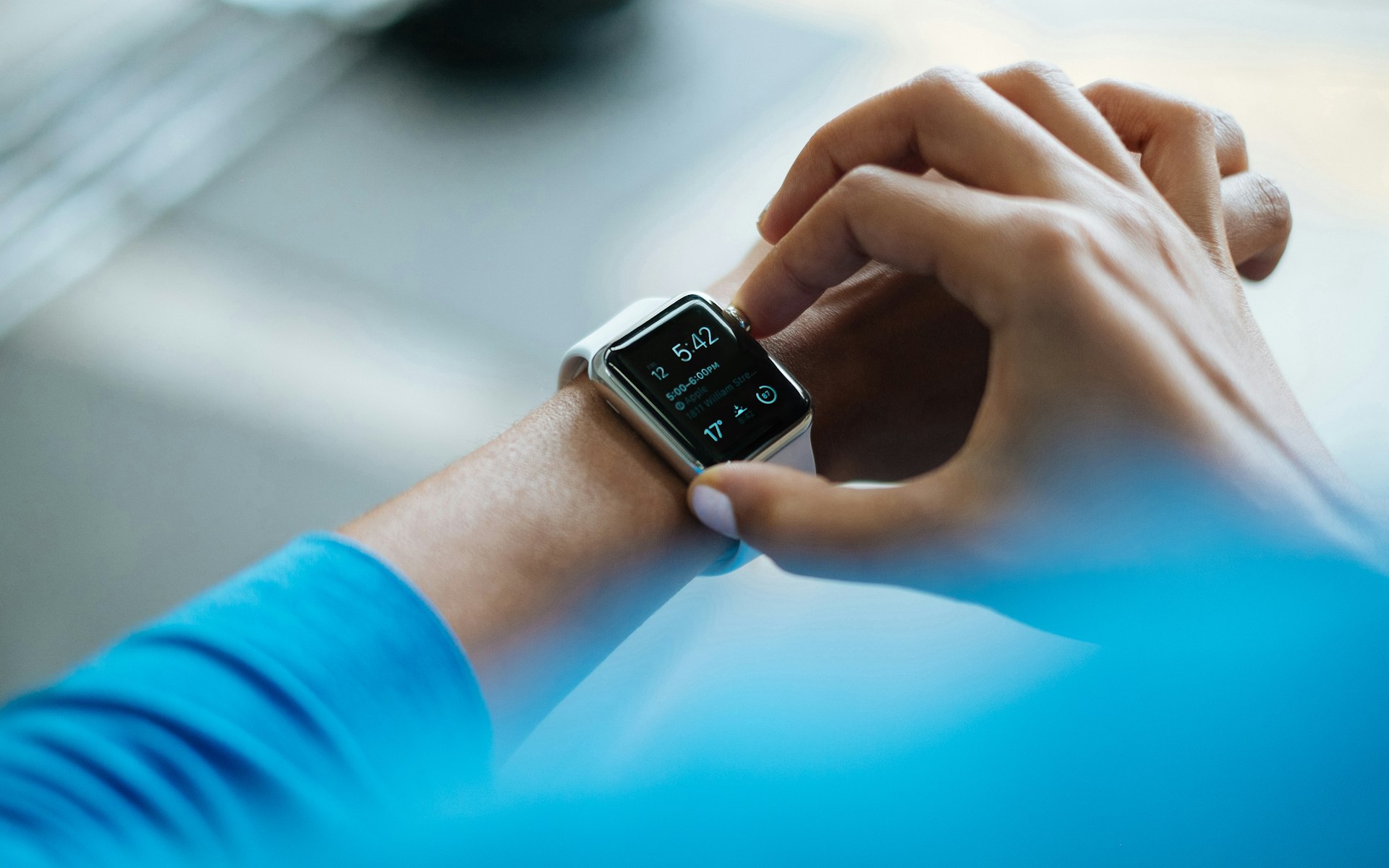
The honest truth about sleep is that most people collect beautiful data about it with a wearable and then do little with it. The biggest gains are behavioural: catch morning light, dim your screens, keep caffeine to early in the day, and keep your bedroom cool. That is free, and it works.
Targeted nutrition sits one layer below that, as support once the basics are in place. Within EU food-claim rules there is little, but something, that can be said firmly: melatonin contributes to reducing the time it takes to fall asleep, and magnesium contributes to the normal functioning of the nervous system and to the reduction of tiredness and fatigue. Those are the claims we make. About deep sleep or flushing out waste we promise nothing, because for a supplement that is not substantiated.
This is the gap YouCaps works in. We read the sleep and recovery signals your wearable already collects and translate them, within what the science and the rules allow, into a monthly formula matched to your pattern. Not a miracle, but an honest bridge between your data and a choice you would otherwise make on a hunch.
Related: see the sleep and recovery gear we recommend to support a steadier rhythm.