Ask most people what they should do for their health and they will say some version of "more cardio". Walk more, run more, get the steps in. None of that is wrong. But it quietly skips the tissue that may matter most for how you age: muscle. Not for how you look on a beach, but for whether you can carry your own shopping, get up off the floor unaided, and stay out of a hospital bed at eighty. Muscle is not decoration. It is, increasingly, understood as an organ of longevity.
The silent decline nobody warns you about
Somewhere in your thirties, without any announcement, your body starts giving muscle back. The medical name is sarcopenia: the age-related loss of muscle mass and, more importantly, muscle strength. It is slow at first, on the order of a few percent per decade, and then it accelerates. After sixty the losses can reach several percent per year, and strength fades even faster than size.
The revised European consensus on sarcopenia (Cruz-Jentoft and colleagues, Age and Ageing, 2019) made a deliberate shift here: it put strength, not just muscle mass, at the centre of the definition. What matters is not how much muscle you carry on a scan, but how much force you can actually produce. Because that is what fails you first. It is not the mirror that changes; it is the moment a jar will not open, a flight of stairs leaves you winded, or a stumble that you would once have caught turns into a fall.
Here is the part most people never hear: this decline is not a fixed sentence written by your birthday. It is largely a use-it-or-lose-it process, and the single most effective countermeasure is the one thing most adults never do deliberately. They keep walking, they might jog, but they almost never load their muscles against meaningful resistance. And muscle only holds its ground when it is given a reason to.
What the mortality data actually shows
This is where it stops being intuition and becomes hard epidemiology. The evidence linking strength to survival is, frankly, some of the most striking in preventive health.
Start with grip strength, a crude but brutally effective proxy for whole-body strength. In the PURE study, Leong and colleagues (The Lancet, 2015) measured grip in nearly 140,000 adults across 17 countries and followed them for years. Every 5 kilogram reduction in grip strength was associated with a 16% higher risk of death from any cause, plus higher risks of heart attack and stroke. Strikingly, grip strength was a stronger predictor of cardiovascular death than systolic blood pressure. A simple squeeze of a dynamometer told them more about your future than the number your doctor frets over most.
Grip strength itself is not magic; it is a window. It reflects the total muscle and neuromuscular capacity you have built and kept. The natural next question is whether doing the thing that builds strength changes the odds. It does.
Momma and colleagues pooled the evidence in a systematic review and meta-analysis (British Journal of Sports Medicine, 2022). Across the studies, people who did muscle-strengthening activities had roughly 10 to 17% lower risk of all-cause mortality, as well as lower risk of cardiovascular disease, cancer and diabetes. Two details matter enormously. First, this was independent of aerobic exercise: lifting added protection on top of cardio, not instead of it. Second, the curve was not "more is always better". The mortality benefit appeared to peak at around 30 to 60 minutes per week, then flatten. This is not a demand to live in the gym. It is thirty to sixty minutes, a week, against the clock of your entire life.
A dynamometer squeeze predicted cardiovascular death better than blood pressure. The strength you build is not vanity. It is a vital sign.
Beyond living longer: living better
Mortality statistics are dramatic, but they undersell the real prize. The goal was never simply more years; it is more good years. The gap between how long you live and how long you live well is your healthspan, and this is where strength training does its quietest, most important work.
Your skeleton depends on it. Bone is living tissue that responds to load. When muscles pull hard against bone, they signal it to stay dense and strong. Resistance training is one of the few things shown to defend, and sometimes rebuild, bone mineral density as you age, which is the difference between a fall that bruises and a fall that breaks a hip, an event that too often marks the end of independent life.
Your metabolism runs on it. Skeletal muscle is the largest site where your body disposes of blood glucose. More muscle, and muscle that is worked regularly, means better insulin sensitivity and steadier blood sugar, a direct buffer against the type-2 diabetes that shadows so much of ageing. Muscle is not just a mover; it is a metabolic organ.
Your independence is built on it. Strip away the biochemistry and you are left with something plain. The ability to rise from a chair, climb stairs, catch yourself when you trip, and carry what you need, that is what strength is, and it is what decides whether your later decades are lived on your own terms or someone else's. Falls are among the leading causes of injury and lost independence in older adults, and strength and balance work is one of the most effective defences we have.
How much do you actually need?
The honest, almost annoying answer is: less than you fear. The mortality data pointed to a sweet spot of roughly thirty to sixty minutes of muscle-strengthening work per week. Public-health guidance around the world converges on a similar floor: train the major muscle groups on two or more days a week.
That can be two focused half-hour sessions. It does not require a gym full of machines, a punishing schedule, or heroics. What it requires is that the effort is real: muscle only adapts when you give it a load it is not already comfortable with, and then let it recover. That principle, progressively asking a little more of the body and recovering between efforts, is the entire engine of getting stronger. It is also exactly the logic the YouCaps training tracker is built around, so that every set you log is pushing you slightly beyond where you were, in a way you can see.
One more honest note, on the supplement question, because it always comes up. No capsule builds muscle; the training does. What foundational nutrition can do is support the process, within what the evidence and EU rules allow. Protein contributes to the growth and maintenance of muscle mass and to the maintenance of normal bones, which is an authorised claim and a real one. Vitamin D contributes to normal muscle function and to the maintenance of normal bones, and calcium is needed for the maintenance of normal bones. These are genuine, modest supporting roles, not shortcuts. The work is still the work.
Two sessions a week, real effort, recovery in between. Against the length of a life, that is one of the highest-return investments you will ever make.
From lifting to your formula
Strength training and the rest of your health are not separate accounts. The same night's sleep that consolidates your memory also repairs the muscle you loaded that day. The HRV we discuss in what your HRV says about recovery reflects, in part, whether you are recovering enough to adapt to your training or digging a hole. Load and recovery are two halves of one system.
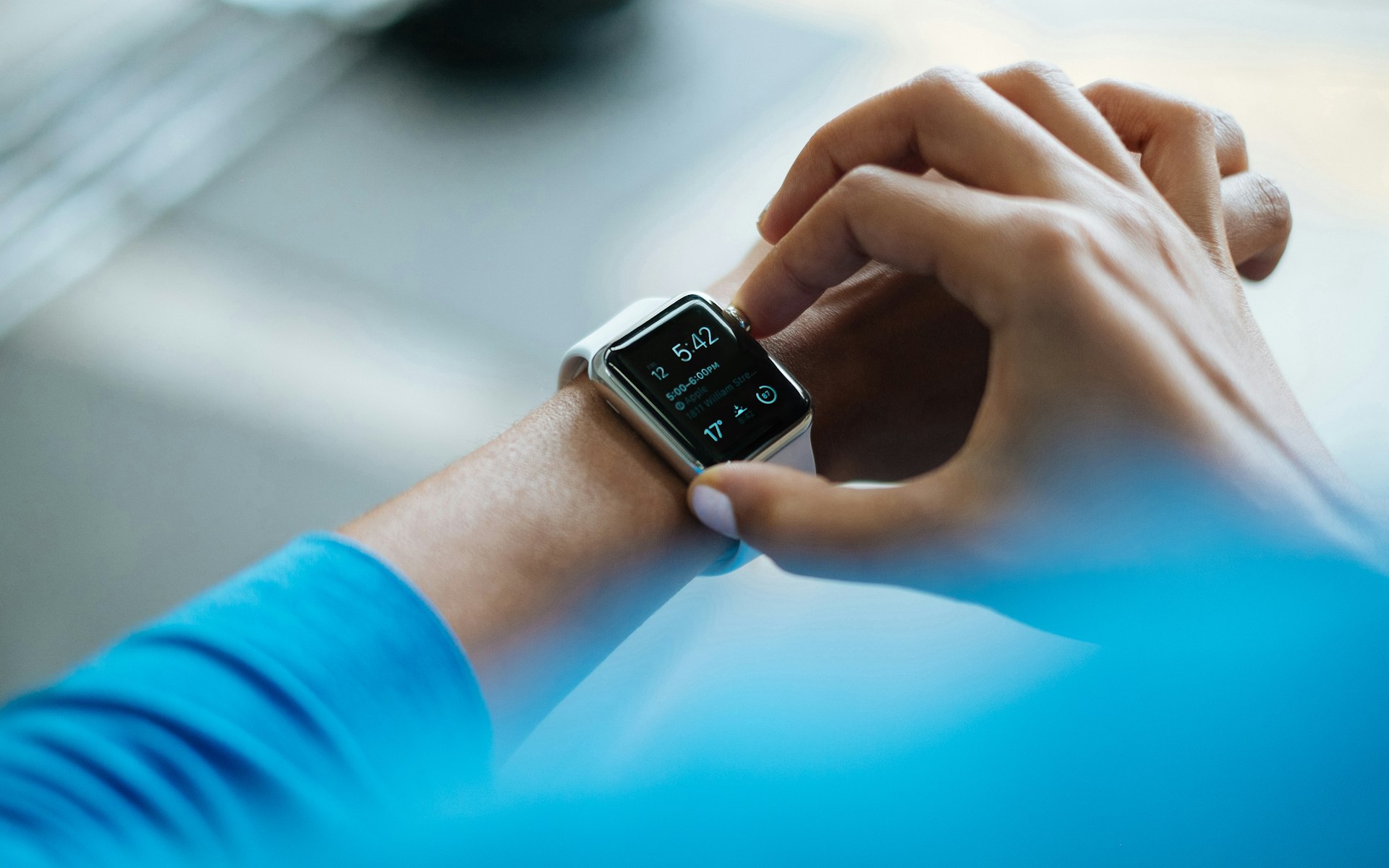
That is the thread YouCaps follows. The training side of the app coaches you through the sessions themselves, set by set, so that "a little more than last time" is measured rather than guessed. Your wearable then tells us how well you absorbed it, reading your sleep, your resting heart rate and your HRV against your own baseline. And your monthly formula is built from that genuine picture, within what the science and the EU rules allow, so the foundational support around your training actually fits the body doing the work. Muscle is the organ of longevity. We help you build it on purpose, and recover from it on evidence.
Related: see the recovery and wellness gear we recommend to protect the muscle you build.