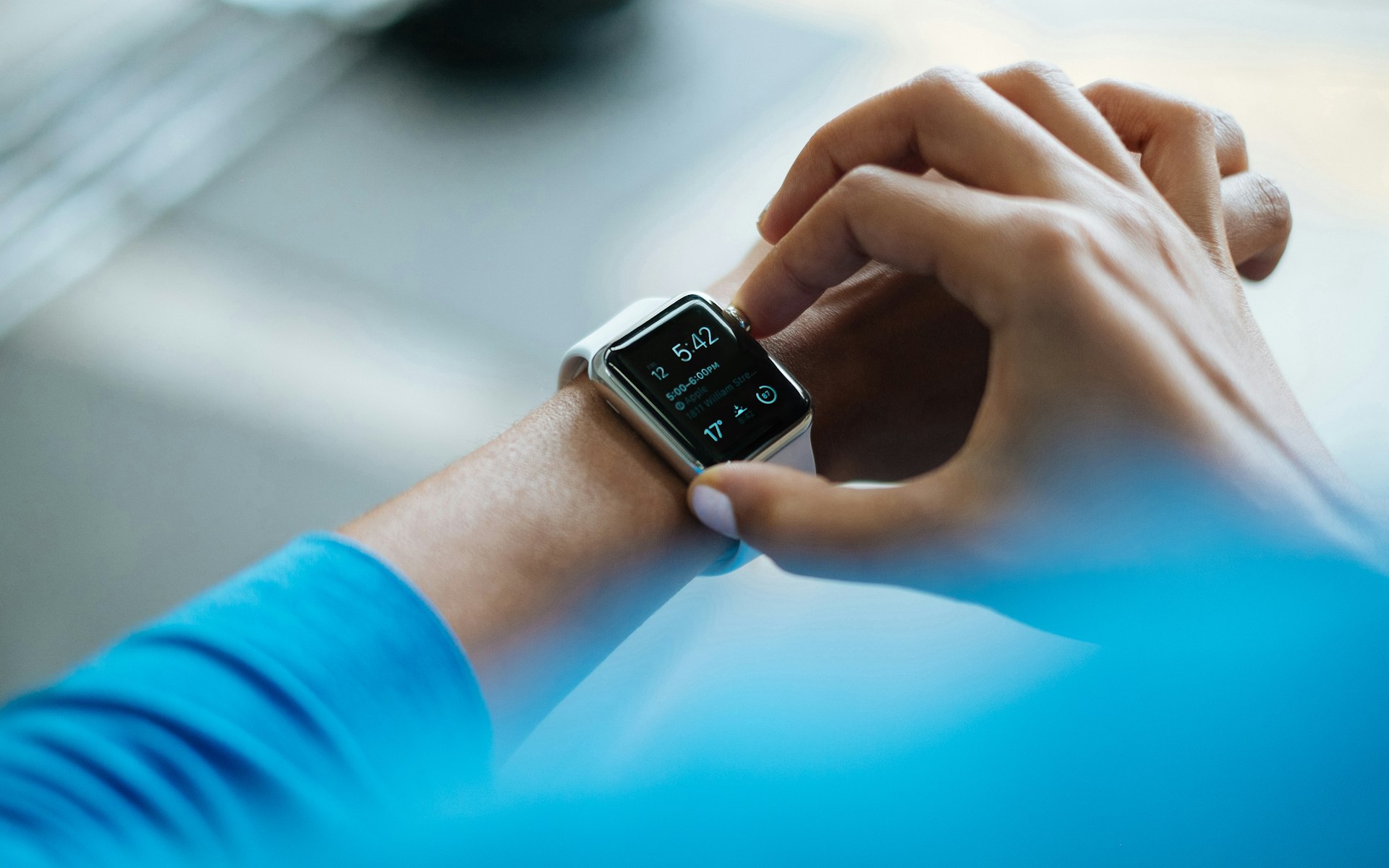
A heatwave rarely announces itself in your recovery. You feel a little more tired, a little flatter, and you might blame the week itself. But if you wear an Oura, Whoop, Garmin or Apple Watch, the heat leaves fingerprints all over your data, often before you consciously notice a thing. In the biology of sleep and what your HRV says about recovery we covered the signals themselves. This is about one specific thing that shifts them all at once: temperature.
Why heat is hardest at night
To fall asleep, your core temperature has to drop by roughly a degree. That drop is one of the strongest internal signals that it is time to sleep, and your body engineers it by sending warm blood to the surface of your skin, where it sheds heat into the room. This is the same downhill curve you can see in reading your sleep data.
A warm room breaks that mechanism. If the air around you is already close to your skin temperature, there is nowhere for the heat to go. Your core stays too warm, the sleep signal is muted, and you lie there restless without quite knowing why.
It gets more specific than "you sleep worse". Okamoto-Mizuno and Mizuno (Journal of Physiological Anthropology, 2012) showed that the thermal environment is the single most influential environmental factor on sleep architecture, and that heat disrupts deep sleep and REM more than almost anything else. There is a cruel twist in REM in particular: during REM sleep your body largely suspends its own thermoregulation, so it cannot fight a warm room at all. The hours of dreaming and memory consolidation are exactly the hours heat steals first.
How a hot week shows up in your data
Because heat pushes on your cardiovascular system and your sleep at the same time, it shifts nearly every number your wearable reports. Once you know the pattern, a warm week becomes recognisable at a glance.
Resting heart rate goes up. To cool itself, your body moves more blood to the skin, and when you have also lost fluid through sweat your blood volume drops slightly, so the heart has to beat a little faster to circulate what remains. A resting heart rate that sits a few beats above your normal for several nights is one of the clearest signatures of heat and mild dehydration.
HRV goes down. Heart rate variability reflects the balance between your stress and recovery systems. Heat load and fluid loss both tilt you toward the sympathetic, "on" side, so your overnight HRV dips, exactly as it would after a hard session or a late glass of wine. The difference is that here the cause is the weather, not your training or your choices.
Sleep gets lighter and more broken. Expect less deep sleep, less REM, and more of those brief awakenings that you half-remember in the morning. Périard, Racinais and Sawka (Scandinavian Journal of Medicine & Science in Sports, 2015) describe how the body adapts to repeated heat exposure over one to two weeks, which is also why the first few hot nights of a spell tend to feel the worst, before you acclimatise.
Skin temperature reads higher. Many rings and watches now track a nightly skin or wrist temperature, and a warm spell nudges it upward. On its own that is just heat. It matters because it helps your device, and you, separate an environmental blip from a genuine change worth acting on.
The practical point is this: a hot week is not a sign that you are broken or that your training has failed. It is context. Reading a single low HRV morning without that context is how people talk themselves into rest days they don't need, or push through fatigue they should respect. The number only means something once you know what moved it.
A warm week does not make you weaker. It changes what your data means, and the skill is reading the difference.
Fluids and electrolytes: what may honestly be said
Here, as with sleep supplements in the wind-down, honesty beats a pretty promise. The summer shelf is full of sachets promising to rehydrate, replenish and rescue your recovery. Within European rules, very little of that may be said firmly. Here is what actually holds up.
Behaviour comes first, and it is free. Drink steadily across the day rather than chugging a litre before bed, which just wakes you for the bathroom. Keep the bedroom cool, quiet and dark, the same three knobs from the wind-down. Shift hard effort to the cooler morning or evening hours. None of this is glamorous, and all of it does more than any capsule.
When you sweat, you lose more than water. Sweat also carries electrolytes out of you, chiefly sodium, along with potassium and some magnesium. Over a hot, active week those small losses add up, and that is where a supplement can play an honest supporting role, within strict limits on what may be claimed.
Magnesium contributes to normal muscle function, to normal functioning of the nervous system, to electrolyte balance, and to the reduction of tiredness and fatigue. Those are authorised claims, and they are exactly the kind of ordinary, foundational support a sweaty week can call on. Potassium contributes to normal muscle function and to normal functioning of the nervous system. These are real, and they are modest.
And the honest boundary: no authorised claim lets anyone tell you a supplement "improves your hydration", "prevents heat exhaustion" or "boosts your recovery in the heat". So we don't say it. Electrolytes support normal function; they are not a cooling agent and not a substitute for water, shade and sense. Anyone selling you the dramatic version is selling you a claim dressed up as science.
In the heat, the cool room and the water bottle do 95 percent. A capsule is the last 5 percent, and only if the basics are already in place.
From a hot week to your formula
A heatwave is almost the perfect illustration of why context beats a single reading. Your HRV dips, your resting heart rate lifts, your sleep frays, and none of it means what it would mean in a cool week. Read alone, each number misleads. Read together, and against your own baseline, they tell a clear and temporary story.
That is the work YouCaps does. We read your resting heart rate, your HRV, your sleep and your temperature over time, so a heat dip looks like a heat dip and not like a decline you need to panic about. Then we translate the genuine pattern underneath, within what the science and the EU rules allow, into a monthly formula matched to you. Not a promise to beat the summer, but an honest bridge from your data to a choice you would otherwise make on a hunch.
Related: see the recovery gear we recommend for the warmer months and beyond.