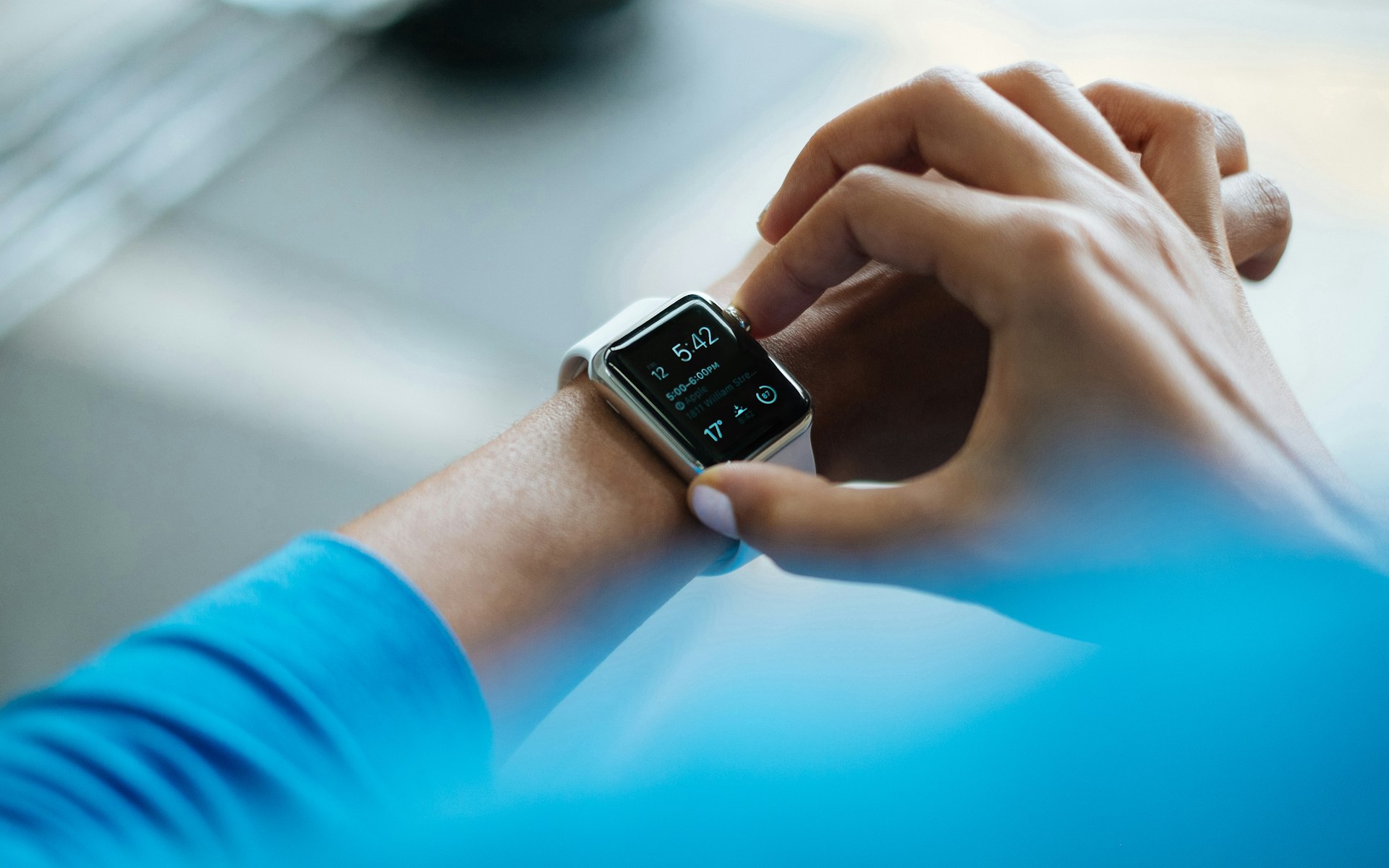
Good sleep is not a matter of turning off the light and hoping. It is the systematic winding-down of stimulation, so your biology can make the transition into sleep. In the biology of sleep and reading your sleep data we covered how sleep works and what your wearable tells you. This is the third part: what you actually do tonight.
The 10-3-2-1-0 protocol
The 10-3-2-1-0 is a simple rule of thumb for winding down your evening. Not a clinical prescription, but a practical countdown that maps neatly onto the biology of sleep.
- 10 hours before: no more caffeine. Caffeine blocks your adenosine receptors, the molecule that builds your sleep pressure. With a half-life of five to seven hours, an afternoon cup still works at night. Drake and colleagues (Journal of Clinical Sleep Medicine, 2013) showed that 400 mg of caffeine, even six hours before bed, cut measured sleep by more than an hour. Ten hours of margin is generous, but sensible.
- 3 hours before: no heavy meal or alcohol. That keeps your digestion at rest and avoids the downhill heart-rate curve from reading your sleep data. Kinsey and Ormsbee (Nutrients, 2015) describe how late eating affects your overnight metabolism and sleep quality. Alcohol may help you fall asleep faster, but it disrupts the second half of your night.
- 2 hours before: stop demanding work. Cognitively heavy tasks keep your cortisol high. Stepping away gives your brain room to shift into its resting mode, the so-called default mode network.
- 1 hour before: screens away. The blue light of screens suppresses your melatonin through the light-sensitive cells in your retina. Dim things down, or switch to warm light.
- 0: don't snooze. Get up at your first alarm. A fixed wake time is one of the strongest signals for your body clock.
Your bedroom as a sanctuary
Your sleep environment is an external timekeeper: it can help your body clock switch off, or keep it awake. Three knobs do most of the work.
Temperature: cool, around 16 to 18 degrees. To fall asleep, your core temperature needs to drop by about a degree. A cool room makes that easy. A too-warm room does the opposite: your body then tries to shed heat but cannot cool the core enough, and that directly sabotages your deep sleep.
Sound: under 35 decibels. Even sounds that don't wake you, like traffic or a humming fridge, can trigger a brief autonomic response that lowers your HRV for a moment. The WHO night-noise guidelines sit around 30 to 40 decibels. Earplugs or a little white noise can help.
Light: as dark as possible. The melatonin route runs through your eyes, even through closed eyelids. Blackout curtains or a good sleep mask keep that route inactive. Bonus: cover the little LED lights in the room.
Okamoto-Mizuno and Mizuno (Journal of Physiological Anthropology, 2012) showed that the thermal environment is the single most important environmental factor for your sleep architecture. Heat disrupts REM sleep even more than noise, because your thermoregulation largely shuts down during REM.
Supplements: what may honestly be said
Here an honest word beats a pretty promise. The sleep-supplement market is full of claims, but within European rules very little may be said firmly. Here is what actually holds up.
Melatonin is the only ingredient with an authorised sleep claim: it contributes to reducing the time it takes to fall asleep (at 1 mg). It is most useful when your timing is disrupted, for example with jet lag or shift work. Note that more is not better: low doses are often enough, and high doses leave some people groggy the next morning.
Magnesium contributes to the normal functioning of the nervous system and to the reduction of tiredness and fatigue. Biochemically it is also an NMDA antagonist, and a small trial in older adults with sleep problems (Abbasi and colleagues, 2012) saw improvements in sleep efficiency. But a sleep-specific claim for magnesium is not authorised, so we don't make one. We stick to what is allowed.
And honestly about the rest: ingredients like L-theanine and apigenin are being studied for relaxation and calm. Hidese and colleagues (Nutrients, 2019) saw, for instance, that L-theanine reduced stress symptoms. Interesting, but these compounds have no authorised EU claim. We may include them where it makes sense, but we promise nothing about them. No claim dressed up as science.
A supplement is the last 5 percent. The first 95 percent is your behaviour and your environment.
From tonight to your formula
Start tonight with the protocol and the three environmental knobs. That is free, and it is by far the biggest lever. What your wearable measures then helps you see what does the most for you.
That is where YouCaps comes in. We read your sleep and recovery signals and translate them, within what the science and the EU rules allow, into a monthly formula matched to your pattern. Not a miracle and not an overblown promise, but an honest bridge between your data and a choice you would otherwise make on a hunch.
Related: a few tools make a wind-down easier. See the sleep and wellness gear we recommend, from a sunrise wake-up light to recovery devices.